Case Study: Three-Phase Power Supply Installation at a Renewable Energy Company
We recently completed a commercial electrical installation for a renewable energy company, where the team needed a dedicated three-phase supply installed for a pump in the tank room.
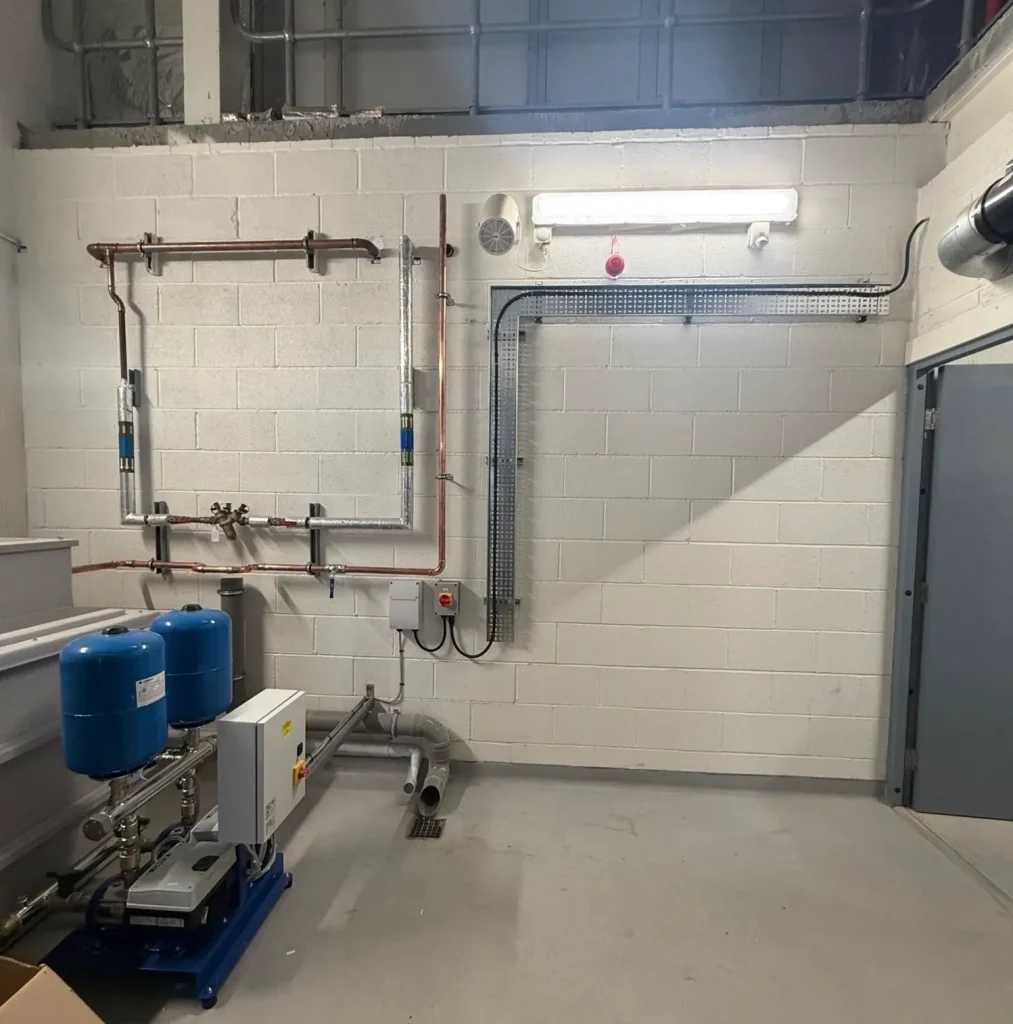
The job involved running a new 10A three-phase supply from the existing distribution board to the pump position at the rear of the room. There was already cable containment in place for part of the route, but additional metal cable tray had to be measured, cut and installed on site to complete the run properly.
It was the sort of installation where the finished electrical work mattered, but so did the way the job was carried out. It is an operational workplace with its own health and safety requirements, so careful working and awareness of the people around us were an important part of the brief.
That was reflected in the feedback we received afterwards, with Harry getting a particularly good mention:
“I just wanted to say that Harry Rogers, who was here yesterday to do the 3 phase power supply, wins ‘contractor of the year’! He was an absolute pleasure to deal with, everything done in a super safe way and very aware of what is required in terms of health and safety.”
We’ll happily take “contractor of the year”!
Installing the Three-Phase Supply
The new supply was taken from the existing DB1 distribution board using armoured cable.
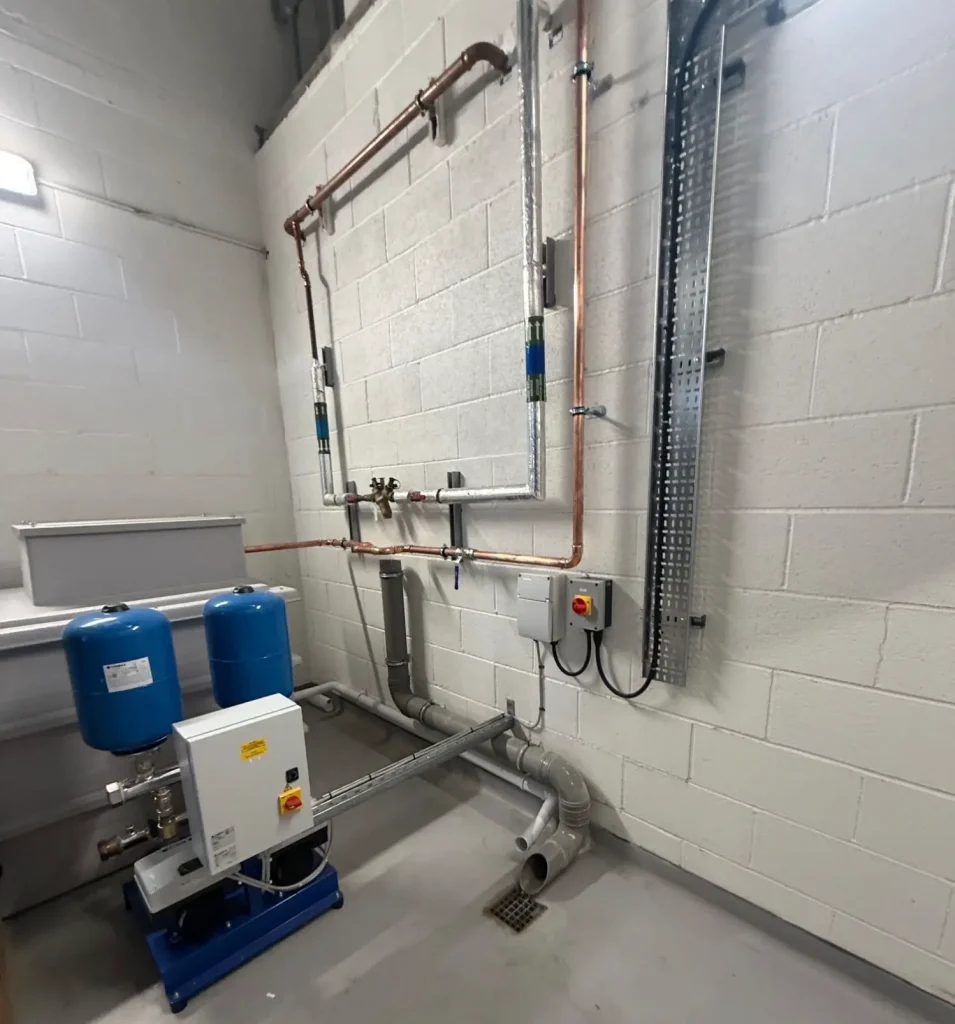
We followed the existing cable tray where possible before extending the containment to reach the pump at the back of the tank room. The additional tray was fabricated and fitted on site so that the cable had a secure, supported route through the space.
Keeping the installation properly contained is particularly important in a plant room environment. It protects the cable and keeps everything organised, while also making the finished installation easier to inspect and maintain in future.
At the pump itself, we installed a rotary isolator so the electrical supply can be disconnected locally when maintenance is required. This means anyone working on the equipment has a clear means of isolating the pump without needing to return to the main distribution board.
Manufacturer-Specified RCD Protection
The pump manufacturer specified Type B RCD protection for the installation, so we installed this within a dedicated metal enclosure.
RCD selection matters because different types of equipment can produce different kinds of residual current. Following the manufacturer’s requirements ensures the protection provided is suitable for the particular equipment being installed.
From there, we connected the supply to the pump’s control module using H07 flexible cable.
The end result is a dedicated supply designed around the pump itself, with the required protection and a practical local means of isolation.
Health and Safety While Working on Site
A significant part of this job involved cutting and fitting metal containment within an active workplace.
That introduces practical risks before you even get to the electrical work. Cutting equipment creates flying metal fragments, while newly cut trays can leave sharp edges and small offcuts. Tools, materials and work areas also need to be managed carefully when other people are continuing to work nearby.
We planned the installation so that these risks could be controlled throughout the job rather than simply clearing everything up at the end.
That included keeping the working area organised, managing metal offcuts as the tray was fabricated and making sure people nearby were not unnecessarily exposed to the work being carried out.
For us, that is simply part of working properly on a commercial site. Technical ability is of course important, but so is being aware of the environment you are working in and the people around you.
A Safe Installation Going Forward
The safety considerations did not stop once the job was finished either.
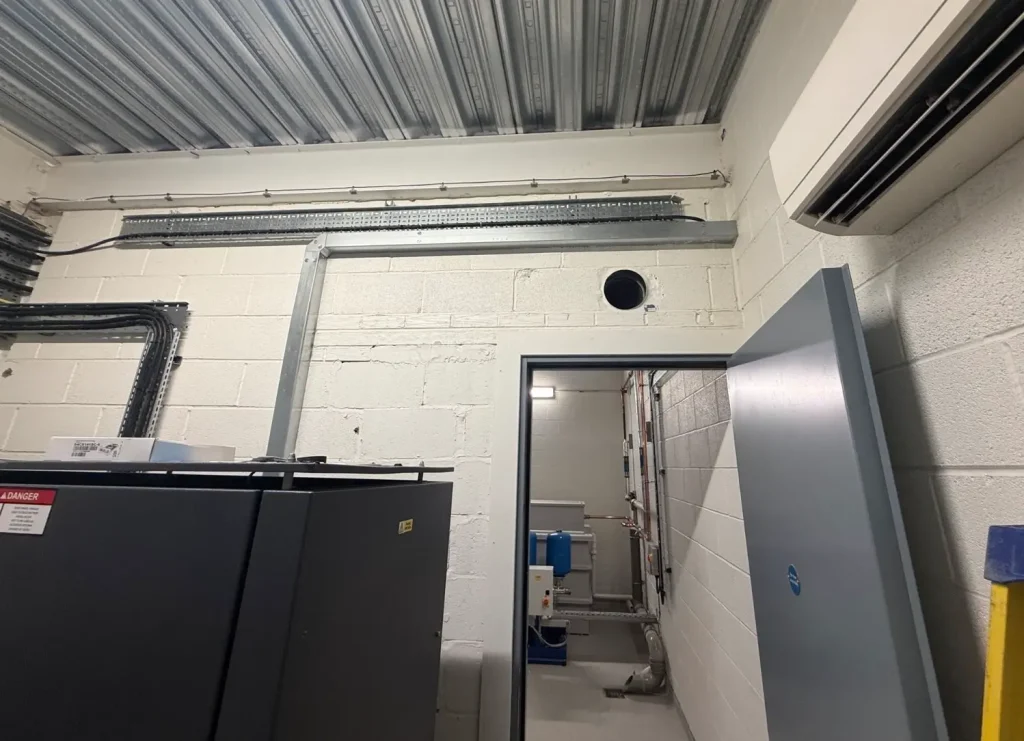
The armoured cable and metal tray now provide protection and support for the new electrical supply. The rotary isolator gives maintenance staff a local point of isolation, while the Type B RCD provides the protection specified for the pump.
Everything was installed neatly within the existing plant room layout and set up so that the equipment can be safely operated and maintained going forward.
Harry clearly made a good impression on this one, and we’re pleased that both the standard of the installation and the way the work was carried out were recognised.
If you need three-phase power, machinery supplies or other commercial electrical work in East Sussex, Kent or the surrounding area, speak to TS Electrical.