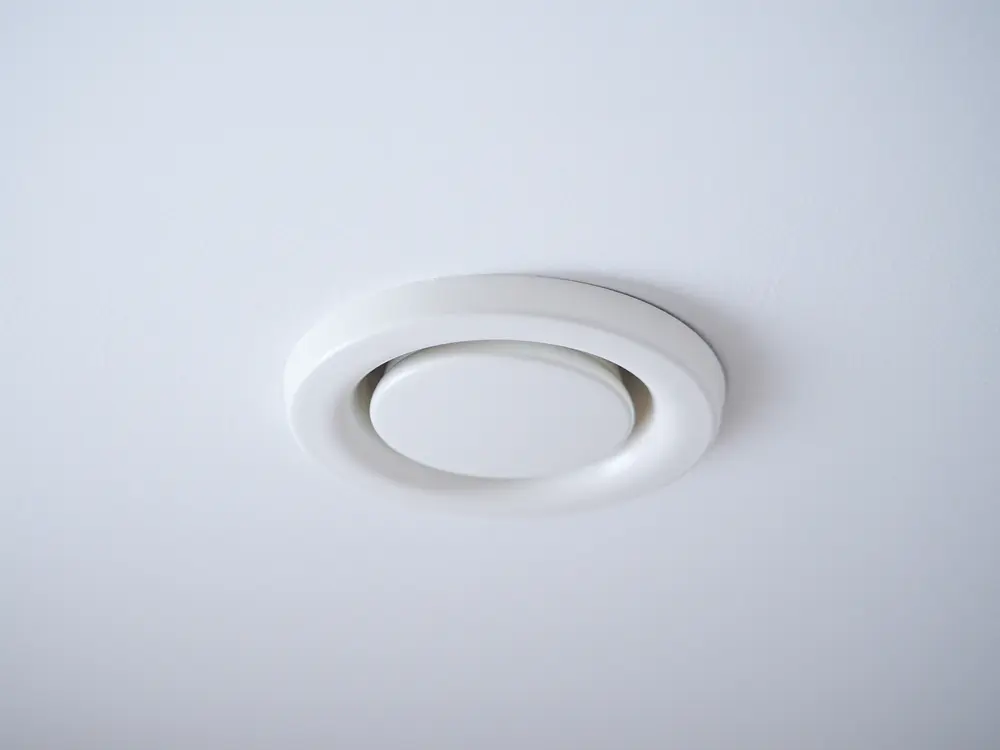
A heat recovery ventilation system sounds more complicated than it is. The basic idea is that your home still needs fresh air, but instead of throwing warm air straight outside and replacing it with cold air, the system recovers some of that heat first.
MVHR stands for mechanical ventilation with heat recovery. It continuously extracts stale, damp air from rooms such as kitchens and bathrooms, while bringing fresh filtered air into living rooms and bedrooms. Inside the ventilation unit, a heat exchanger transfers heat from the outgoing air to the incoming fresh air.
Importantly, it is not taking the damp air, drying it and putting the same air back into the house. The outgoing and incoming air streams are separate.
A Quick Summary
An MVHR system removes stale, moisture-laden air from the home and replaces it with fresh air from outside. Before the warm outgoing air is expelled, the heat recovery system transfers much of its heat to the cooler incoming air. This reduces ventilation heat losses while keeping fresh air moving through the property.
How Does MVHR Work?
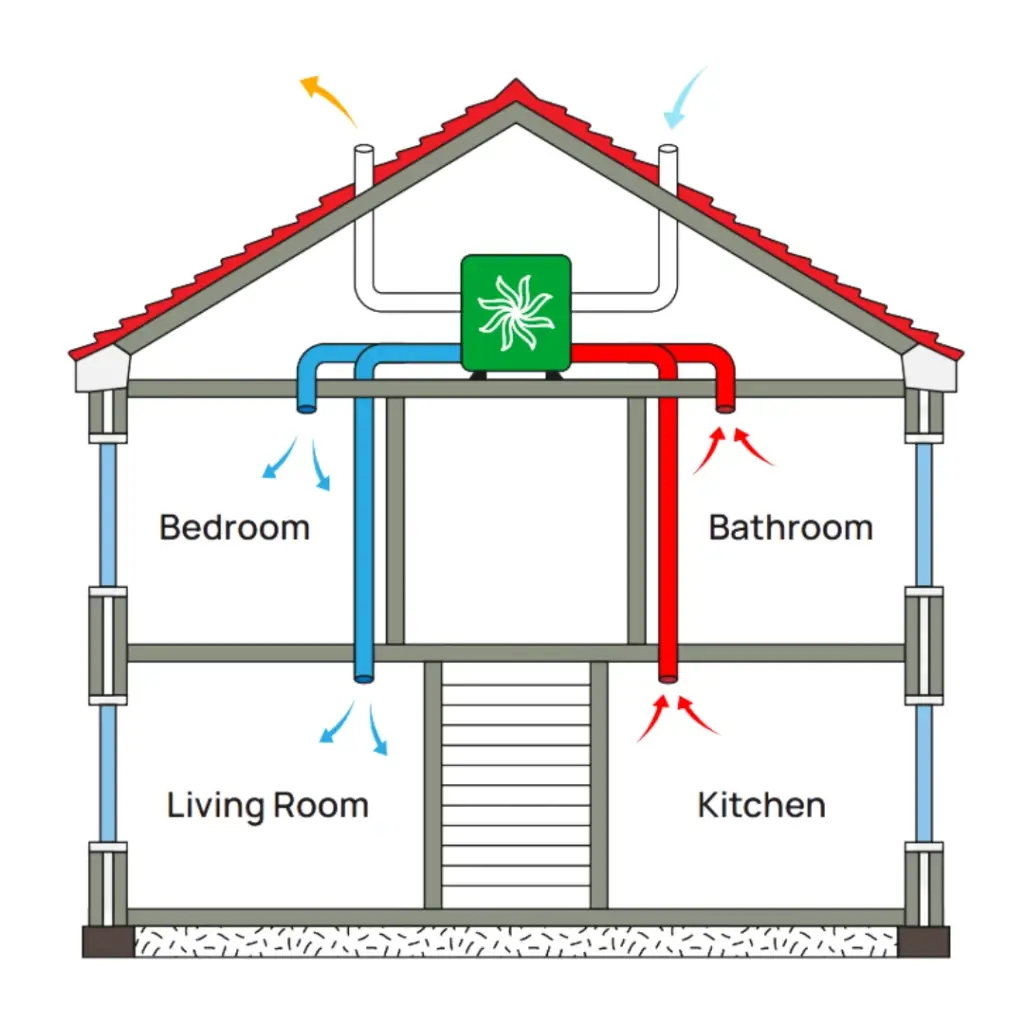
A typical heat recovery ventilation system system has two separate air paths.
One is extracting stale air from places where moisture and odours are produced, including kitchens, bathrooms and utility rooms. The other brings fresh air in from outside and supplies it to rooms such as bedrooms and living areas.
Both streams pass through the ventilation unit. A heat exchanger sits between them and allows the outgoing warm air to transfer heat to the cooler incoming air.
The result is fresh air that arrives in the home already tempered, rather than entering at the same cold outdoor temperature. The system is recovering heat that would otherwise have been lost through ordinary ventilation.
Does MVHR Remove Damp Air?
Yes, but it is important to be clear about what that means.
A heat recovery ventilation system continuously removes stale and humid air from the rooms where most household moisture is produced. That can help control humidity and reduce problems associated with excess moisture when the system is correctly designed and operated. The Passivhaus Trust notes that MVHR removes water vapour from cooking, bathing and everyday occupation while supplying fresh air to the home.
It is not a dehumidifier, and it will not solve a separate damp problem caused by a leak or water entering through the building itself. Its job is ventilation.
Why Does Air Tightness Matter?
MVHR works best in homes with good air tightness.
In a very draughty property, air is already entering and leaving through uncontrolled gaps around the building. That makes it harder for a ventilation system to manage where fresh air comes in and where stale air leaves.
In a more airtight home, ventilation can be controlled properly. This is why MVHR is particularly common in highly insulated and energy efficient new builds.
Is MVHR Worth It?
It can be, particularly where the building is designed around it.
The main benefits are continuous ventilation, fresh filtered air and significantly reduced heat loss compared with simply extracting heated indoor air and replacing it with cold outdoor air.
It can also improve indoor air quality by continually replacing stale air rather than relying entirely on windows and background draughts.
Whether a heat recovery ventilation system makes sense in an existing home depends on the building. Retrofitting ductwork around a finished property can be a substantial job, so the system needs proper planning.
Can MVHR Cool a House?
Not in the same way as air conditioning.
Many ventilation units have a summer bypass. When conditions are suitable, the system stops transferring heat from the outgoing air to the incoming fresh air, allowing cooler outside air into the home without warming it first.
This can provide some gentle cooling, particularly when it is cooler outside at night. However, the Passivhaus Trust is clear that a heat recovery ventilation system is not an air-conditioning system and should not be expected to deal with major summer overheating on its own.
What Does the Electrical Installation Involve?
A heat recovery ventilation system needs an electrical supply for its fans, controls and ventilation unit. Depending on the system, there may also be boost controls, humidity sensors or other controls around the house.
If MVHR is being installed as part of a new build, renovation or wider energy-efficiency project, it makes sense to plan the electrical side alongside the ductwork and other heating systems.
TS Electrical can help with the electrical supply, controls and associated wiring needed for the system.
📧 info@tselectricalservice.co.uk
FAQs
What Is a Heat Recovery Ventilator?
A heat recovery ventilator is the unit at the centre of an MVHR system. It extracts stale indoor air, brings in fresh outdoor air and uses a heat exchanger to transfer heat between the two air streams.
What Is an MVHR System?
MVHR stands for mechanical ventilation with heat recovery. It is a whole-home ventilation system designed to provide continuous fresh air while reducing the amount of heat lost through ventilation.
How Does MVHR Work?
The system extracts warm, stale air from rooms such as bathrooms and kitchens. Before that air leaves the building, heat is transferred to fresh incoming air through a heat exchanger.
Does MVHR Reuse the Same Air?
No. The stale outgoing air and fresh incoming air are separate. Heat passes between them, but the extracted air itself is discharged outside.
Does MVHR Help With Condensation?
It can help by continually removing moisture-laden air from areas such as bathrooms and kitchens. However, it will not fix damp caused by leaks or problems with the building fabric.
Is MVHR Energy Efficient?
MVHR can reduce the heat normally lost when warm indoor air is ventilated outside, which is particularly useful in well-insulated, airtight homes.
Is MVHR Worth It?
It depends on the property. It makes particular sense in airtight, energy-efficient homes where controlled ventilation is important. Retrofitting it into an existing property can involve more extensive work.
Can MVHR Cool a House?
MVHR is not air conditioning. Some systems have a summer bypass that can bring in cooler outside air without recovering heat, but the cooling effect is limited.
Does MVHR Need to Run All the Time?
MVHR systems are generally designed to provide continuous ventilation, although fan speeds can change depending on occupancy and moisture levels.
Does an MVHR System Need an Electrician?
The ventilation system itself involves specialist design and ductwork, while the unit, controls and associated electrical supplies need to be installed safely as part of the property’s electrical system.