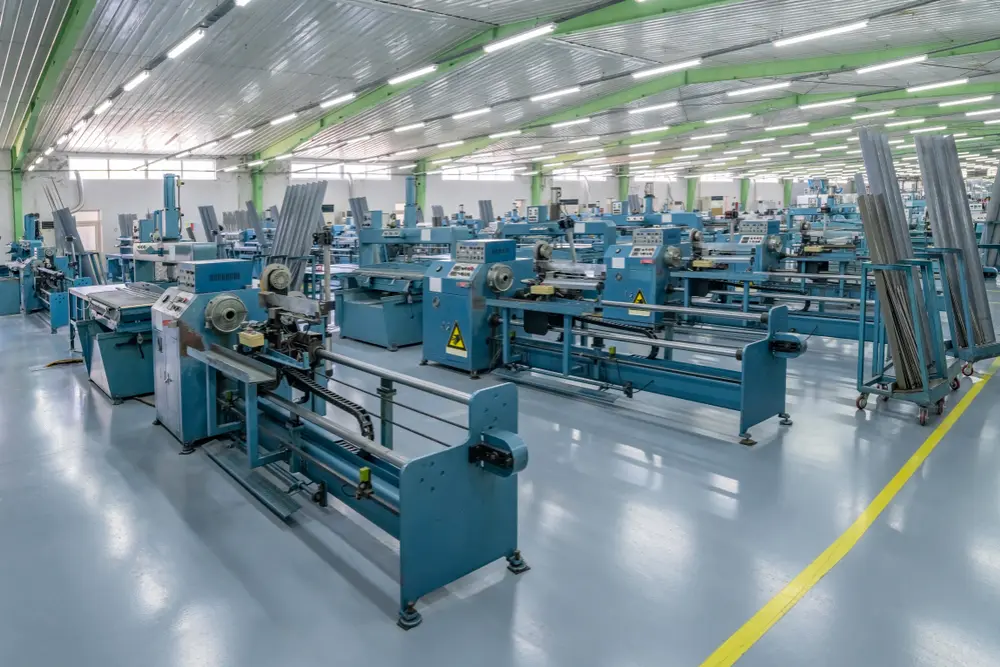
Factory lighting has to do more than make a large space bright. People need to see machinery, controls, walkways, materials and detailed work clearly, often across very different parts of the same building.
That means good lighting for a factory usually involves more than choosing powerful fittings and hanging them from the ceiling. Height, layout, the type of work being carried out and how the building is used all affect the design.
A Quick Summary
Factory lighting should provide enough light for the work being done, with good coverage and as little glare or unnecessary shadow as possible. LED lighting is now widely used in industrial buildings because it can provide strong light output with lower energy use and maintenance requirements than many older systems. In taller factories and warehouses, high bay fittings are commonly used to deliver light from greater ceiling heights.
Why Does Factory Lighting Need Proper Planning?
Different jobs need different amounts and types of light.
The HSE points out that the finer the detail involved in a task, the more illumination is required. It also recommends reasonably uniform lighting across working areas rather than leaving employees constantly moving between very bright and dark sections.
A packing area may therefore need something different from a production bench, inspection station or warehouse aisle.
In many factories, the best answer is a combination of general lighting across the building and more concentrated lighting where detailed work takes place.
What Are High Bay Lights?
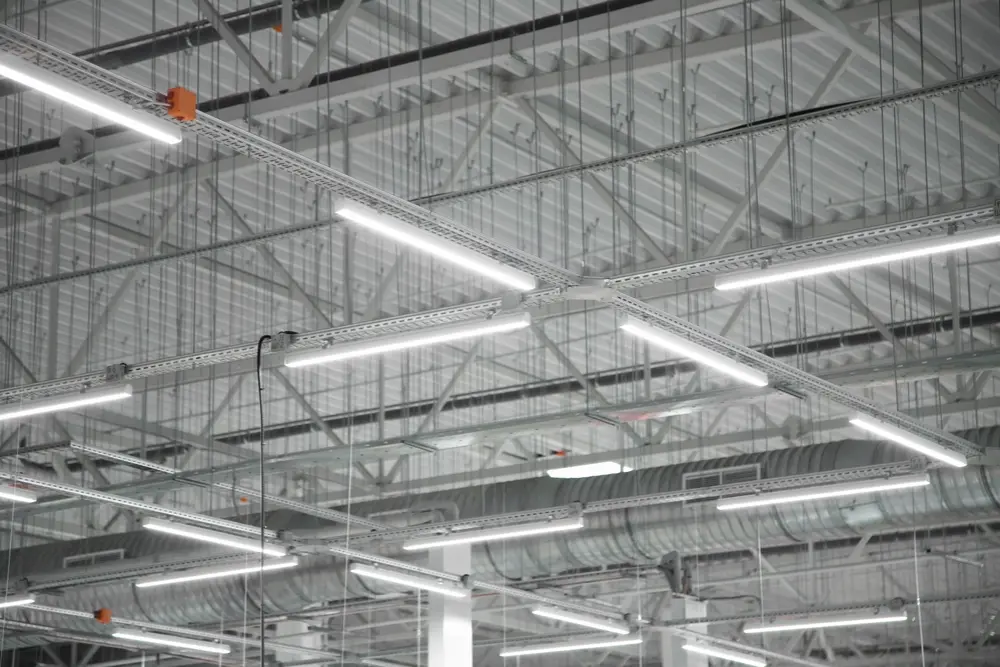
High bay lights are designed for buildings with high ceilings, making them particularly common in factories, warehouses and large industrial units.
Instead of trying to light a large floor area with lots of smaller fittings, high bay units are designed to distribute a useful amount of light from much higher up.
Their position and beam pattern still matter. Poorly planned fittings can create dark areas between workstations or unnecessarily bright patches underneath individual lights.
The Society of Light and Lighting has dedicated guidance for industrial environments, covering practical lighting design across manufacturing and distribution spaces.
Why Is LED Lighting So Common in Factories?
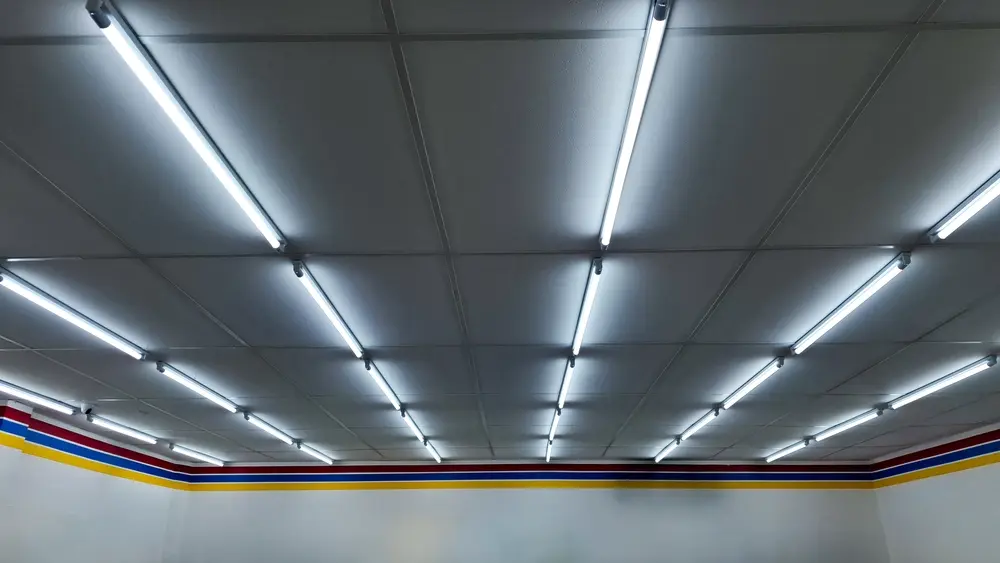
Older industrial buildings can still contain fluorescent, sodium or other older lighting technologies. For many sites, changing to LED lighting can reduce electricity use while also cutting the amount of time spent replacing lamps.
The Carbon Trust identifies lighting as an important area to consider when reducing energy use in manufacturing businesses. It also stresses that simply buying LED fittings is not enough. The design still needs to suit the building and the work taking place.
A badly designed LED installation can still produce poor light.
What Else Should Be Considered?
Factory lighting needs to work around the actual building.
Machinery, storage racking and changes to production layouts can all affect where light reaches. Glare can also be a problem around reflective surfaces, screens or certain machinery.
Controls are worth considering too. Areas that are not occupied continuously may benefit from sensors or zoning so lights do not run unnecessarily.
Maintenance also matters. In an industrial building, reaching a failed fitting several metres above the floor can involve access equipment and disruption, so reliability is important.
What About Emergency Lighting?
General factory lighting and emergency lighting serve different purposes.
If the normal supply fails, suitable emergency lighting may be required to illuminate escape routes and other areas needed for safe evacuation. The HSE includes emergency lighting among the factors that need to be considered when planning workplace lighting.
It therefore needs to be considered alongside the main lighting installation rather than treated as an afterthought.
How TS Electrical Can Help
TS Electrical works on commercial and industrial electrical installations across East Sussex and the surrounding areas.
We can assess existing factory lighting, replace older fittings, install LED and high bay lighting, add controls and carry out the electrical work needed when a building layout changes.
The starting point is always the same: look at the space, the work being carried out and where the light actually needs to be.
📧 info@tselectricalservice.co.uk
FAQs
What Is Factory Lighting?
Factory lighting is the lighting used across industrial and manufacturing buildings, including production areas, machinery, walkways, storage areas and workstations.
What Type of Lighting Is Best for a Factory?
There is no single fitting that suits every factory. High bay LEDs are common in tall spaces, while lower ceilings or detailed work areas may need different fittings or additional task lighting.
What Are High Bay Lights Used For?
High bay lights are designed to illuminate large spaces from high ceiling positions. They are commonly used in factories, warehouses and industrial units.
Is LED Lighting Good for Factories?
Yes. LED lighting can provide efficient, long-lasting illumination for industrial buildings, provided the fittings and layout are suitable for the space.
Can LED Lighting Reduce Factory Energy Costs?
It can, particularly where older, inefficient lighting is being replaced. Controls such as sensors and zoning can also reduce unnecessary operating hours.
How Bright Should Factory Lighting Be?
It depends on the work being carried out. Tasks involving fine detail generally need more illumination than general movement or storage areas.
Does Factory Lighting Need to Be Even?
Lighting should provide reasonable uniformity across relevant working areas. Large differences between bright and dark areas can make work more difficult and uncomfortable.
Can Existing Factory Lighting Be Upgraded to LED?
Often, yes. The existing electrical installation and lighting layout should be assessed first rather than simply replacing every fitting like-for-like.
Do Factories Need Emergency Lighting?
Many workplaces require emergency lighting so people can leave safely if normal lighting fails. The requirements depend on the premises and its fire-safety arrangements.
Can TS Electrical Install Factory Lighting?
Yes. TS Electrical can install and upgrade commercial and industrial lighting, including LED fittings, high bay lighting, controls and associated electrical work.