What Is a Smart Home, and What Actually Makes One Smart?
A smart home is really just a house where certain electrical devices can communicate, respond automatically, or be controlled without you standing next to the switch. That can be as simple as a smart plug you control from your phone, or as involved as lighting, heating, security and other systems working together.
Smart home technology has become much more accessible, but a good smart home should choose the things that are genuinely useful and make sure the electrical setup behind them works properly. In other words, it needs to work within the wider eco-system of your home.
A Quick Summary
Smart home technology connects devices such as lighting, heating, security, plugs and appliances to a network so they can be controlled remotely or automated. Some use Wi-Fi, while others communicate through a hub or smart home system. A well-designed setup can improve convenience, security and energy efficiency, but it works best when the electrical installation is planned around what you actually want to automate.
What Is a Smart Home?
A smart home contains connected devices that can be controlled automatically, remotely or through voice commands.
These smart home devices form part of the wider Internet of Things, which simply means physical devices connected so they can send and receive information.
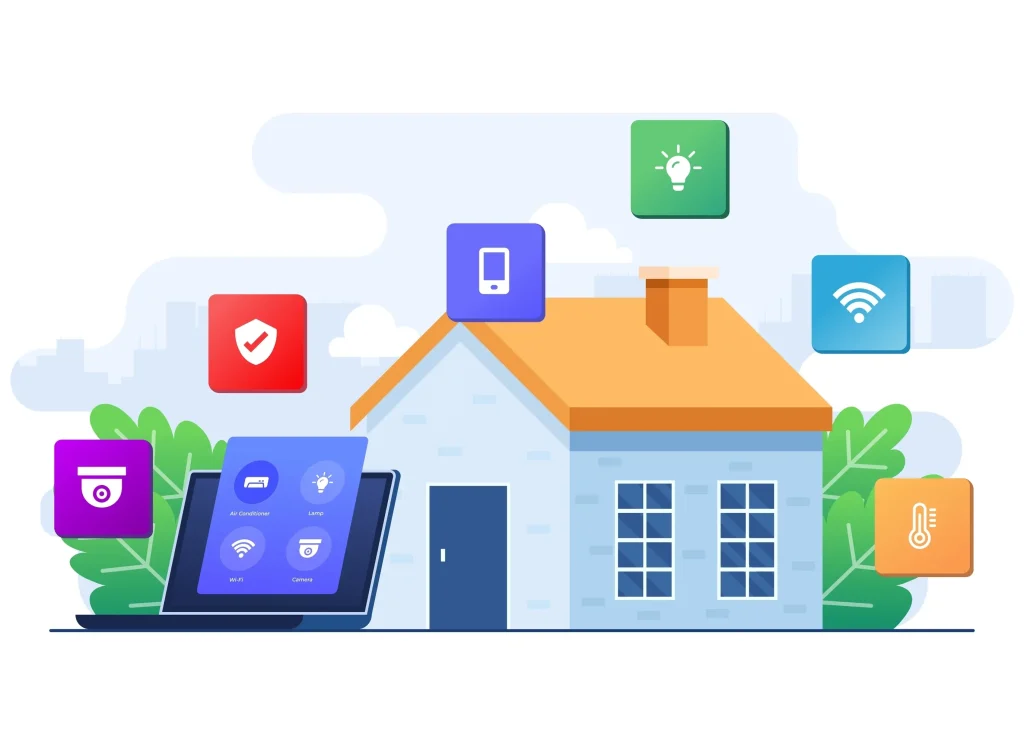
A typical setup might include:
- smart lighting and switches
- smart thermostats
- a smart security system
- motion sensors
- smart plugs
- connected doorbells or cameras
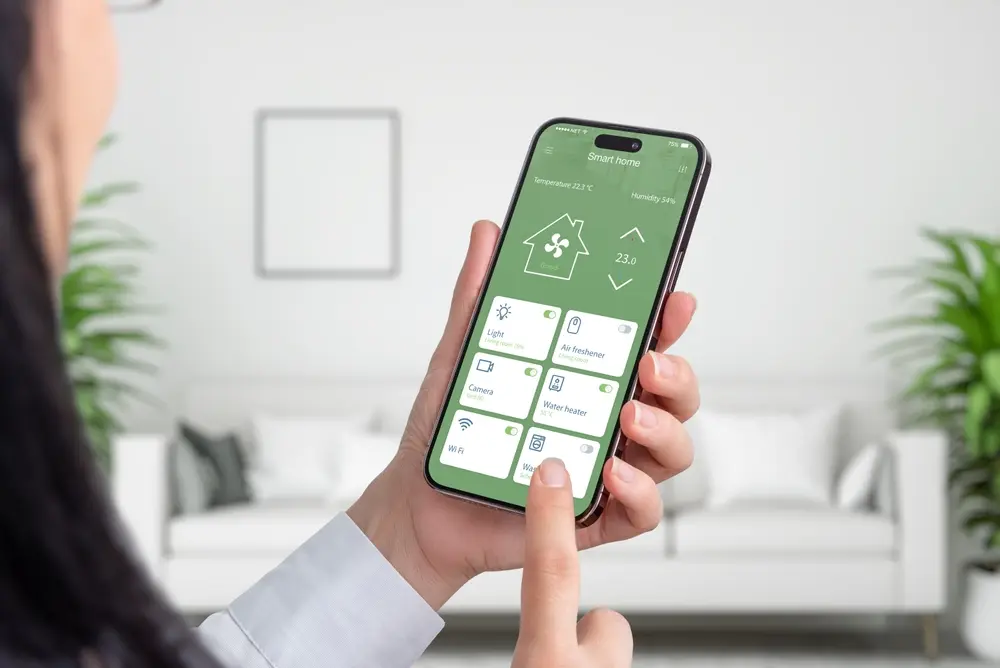
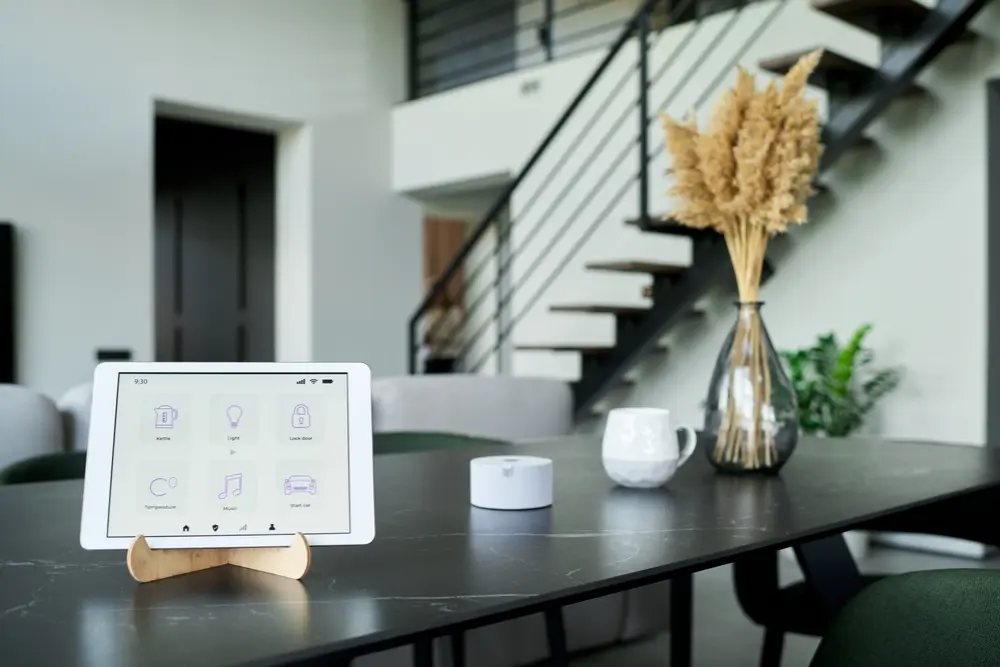
You might control them through an app, a smart speaker such as Amazon Alexa, physical switches or a combination of all three.
How Does Smart Home Technology Work?
Most smart home products communicate through your home network or a dedicated hub.
When you use remote control from an app, press a connected switch or give a voice command, that instruction is sent to the relevant device. A motion sensor can do the same thing automatically. Walk into a hallway after dark, for example, and the lighting can switch on without anybody touching anything.
More advanced systems can link several actions together. Locking the front door might switch off selected lights, lower the thermostat and arm the smart home security system.
The important point is that automation sits on top of the normal electrical system. The lights, sockets and equipment still need a safe and reliable power supply underneath it all.
How to Design a Smart Home
Start with the problem rather than the products.
If you keep leaving lights on, automated lighting might make sense. If different parts of the house are used at different times, smart thermostats or heating controls could help manage energy usage. If security is the priority, cameras, doorbells, lighting and sensors might be more useful.
This is also the stage to think about the electrical side. Smart switches often need particular wiring arrangements, while cameras, controls and other fixed equipment may need power in places where there currently is none.
It is much easier to plan that during electrical work than to discover afterwards that the perfect location has no suitable supply.
Are Smart Home Devices Worth It?
Some definitely are. Others solve problems that did not really exist.
The useful ones tend to be devices you interact with regularly or that can automate systems you would otherwise manage manually. Lighting controls, heating, security and selected smart appliances can all make sense.
A smart plug controlling one lamp may simply be convenient. A properly designed lighting and heating system can have a much bigger effect on how the house works and may help make it more energy efficient.
The aim should be usefulness, not having an app for everything.
How Much Does a Smart Home Cost?
There is no single figure because “smart home” covers such a wide range.
A few plugs, bulbs and a voice assistant can cost relatively little. A more substantial smart home system involving fixed lighting controls, heating, security and electrical alterations costs more because installation and wiring become part of the project.
That is why it helps to decide what you actually want before buying devices.
Where TS Electrical Comes In
If you are planning more than a couple of plug-in gadgets, it is worth thinking about the electrical installation at the same time.
TS Electrical can help with the practical side of smart home upgrades, including power supplies, smart switches, lighting controls, additional sockets and electrical changes needed for fixed devices. What’s more, we can do it in a way that is secure.
We can also help you work out what is worth installing and what probably is not. A smart home should make the house easier to use, not give you another collection of things to troubleshoot.
📧 info@tselectricalservice.co.uk
FAQs
What is a smart home?
A smart home uses connected devices and controls to automate or remotely operate things such as lighting, heating, security and selected appliances.
How does smart home technology work?
Devices communicate through Wi-Fi, a smart home hub or another compatible network. Instructions can come from an app, physical control, automation or voice commands.
Do I need a smart speaker for a smart home?
No. A smart speaker such as Amazon Alexa is one way to control devices, but most systems can also use apps, switches and automated routines.
Are smart home devices worth it?
They can be if they solve a real problem. Heating controls, lighting automation and smart security tend to offer more practical value than buying connected gadgets simply because they exist.
Can smart technology reduce energy usage?
Potentially. Smart thermostats, lighting controls and automated schedules can help avoid heating or lighting spaces unnecessarily.
How much does a smart home cost?
It varies enormously. A few smart plugs can be inexpensive, while a fully integrated system involving electrical work, lighting, heating and security will cost considerably more.
Can existing homes be made smart?
Yes. You do not need a new-build property, although some systems are easier and neater to install when electrical work or renovation is already taking place.
Do smart switches need special wiring?
Some do. Requirements vary between products, which is why it is worth checking the existing wiring before buying switches for the whole house.
What happens if the internet goes down?
It depends on the system. Some devices lose remote functions but still work locally, while others rely more heavily on an internet connection. Physical controls are useful for exactly this reason.
Can TS Electrical install smart home equipment?
Yes. We can help with the electrical side of smart lighting, controls, sockets and fixed smart home devices, including any wiring changes needed for the installation.