Are Ceiling Fans Any Good? When They Work and When They Don’t
Are ceiling fans any good in a typical UK home? They can be, particularly in warm bedrooms and living rooms where better air movement makes the space feel less stuffy. They are not, however, a smaller version of air conditioning. A ceiling fan moves the air already in the room, so whether it is worthwhile depends on the space, ceiling height and what you expect it to achieve.
Quick Summary
A ceiling fan can make an occupied room feel cooler, use no floor space and provide a permanent alternative to bringing out a pedestal fan every summer. Some reversible models can also circulate warm air in winter. They are less suitable for low ceilings, small rooms or homes where the goal is to lower the actual air temperature.
What Does a Ceiling Fan Actually Do?
A ceiling fan creates airflow across the room. That movement helps moisture evaporate from your skin, which is why you feel cooler even though the temperature may not change.
Air conditioning actively removes heat from indoor air, whereas a fan improves how comfortable the existing conditions feel. The NHS includes electric fans in its hot-weather guidance when indoor temperatures are below 35°C, alongside closing blinds during the day and opening windows once the outside air becomes cooler.
A fan works best when people are in the room. Leaving one spinning in an empty bedroom does not bank up cool air for later.
When Is a Ceiling Fan a Good Idea?
A properly chosen fan can be useful when:
- A bedroom becomes uncomfortable during warm nights.
- A living room or office feels still and stuffy.
- Floor space is limited and a freestanding fan gets in the way.
- You want regular airflow without moving a portable appliance around.
- The room has enough height and clear space around the fan blades.
- You want a combined fan and light fitting at the central ceiling point.
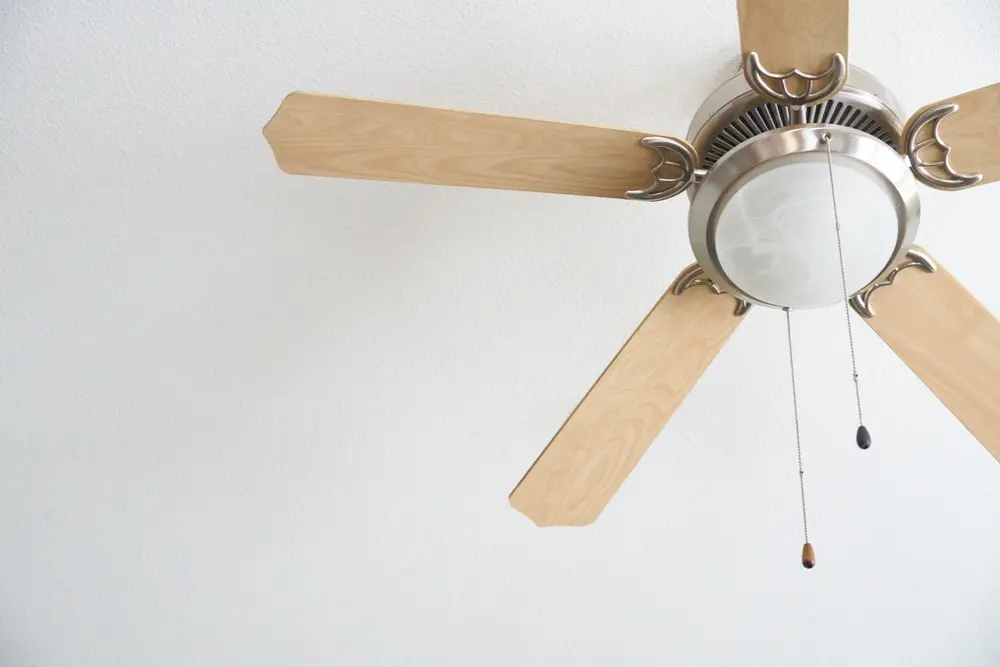
Some models can reverse direction. As the general explanation of a ceiling fan notes, the summer setting directs air downwards, while a reverse setting can circulate warmer air gathered near the ceiling. This is more useful in taller rooms.
When Is It Probably the Wrong Choice?
A ceiling fan is not automatically sensible just because the room gets hot.
| Situation | Suitable? | Why? |
| Warm bedroom with adequate ceiling height | Often | It creates airflow without using floor space. |
| Low ceiling or bunk bed below the fitting | Often not | Safe clearance may be difficult. |
| Small room with a large fan | Usually not | The blades may dominate the room. |
| Conservatory with severe solar heat gain | Only partly | Airflow will not remove incoming heat. |
| Room needing an actual temperature reduction | No | Air conditioning may be more appropriate. |
| High room with uneven warmth | Potentially | A reversible fan may help mix the air. |
Noise deserves consideration too. A decent modern fan should not sound like it is preparing for take-off, but poor motor quality, loose fittings and incorrect balancing can become obvious in a quiet bedroom.
What Should Be Checked Before Ceiling Fan Installation?
Ceiling fan installation involves more than removing a light and attaching something heavier in its place.
The Room and Existing Electrical Setup
Before fitting, an electrician should consider:
- The ceiling height and clearance below the fan blades.
- The room size and layout.
- Whether doors, wardrobes or furniture enter the blade area.
- Whether the ceiling point and supporting structure are suitable.
- How the fan and integrated light will be controlled.
- Whether it uses replaceable light bulbs or an integrated LED unit.
Why the Fixing Point Matters
A moving fan creates weight, vibration and repeated mechanical force. It needs an appropriate structural fixing, not the same treatment as a lightweight shade. The wiring and controls must also suit the fitting and existing circuit.
Electrical Safety First recommends using a registered electrician for installation and repair work. A professional can check the support, make the connections, test the work and confirm that the fan runs safely without wobbling.
Choosing a Fan That Belongs in the Room
The best fan is not necessarily the one with the longest blades or most settings. A large, dark fan may overwhelm a small bedroom, while a tiny flush-fitting model may achieve little in an open-plan living area.
A fan with an integrated fitting may replace the main light, so check its brightness, colour temperature and controls before buying it. Where the room already has poor lighting, treat the fan as part of a wider interior lighting design instead of choosing it alone.
So, Are Ceiling Fans Any Good?
Yes, when the aim is to make a suitable room feel more comfortable through steady airflow. No, when the expectation is that the fan will refrigerate the room, overcome severe overheating or fit neatly beneath a low ceiling without compromise.
TS Electrical can assess the room, check the existing electrical point and provide safe ceiling fan installation across Hastings and the surrounding East Sussex area. We will also say when another option makes more sense, because a fan is only a good installation when it suits the space.
To discuss a ceiling fan or another domestic electrical improvement, contact TS Electrical on:
📞 01424 277030
📧 info@tselectricalservice.co.uk
If you liked this, you may also like: How to Handle an Overloaded Circuit in Your Home
Frequently Asked Questions About Are Ceiling Fans Any Good
Do Ceiling Fans Actually Cool a Room?
A ceiling fan does not lower the room temperature in the same way as air conditioning. Instead, it moves air across your skin, which can make the room feel cooler and more comfortable.
Are Ceiling Fans Worth Having in the UK?
They can be worthwhile in bedrooms, living rooms and home offices that become stuffy during warmer weather. Their usefulness depends on the room size, ceiling height and how often you are likely to use them.
Can a Ceiling Fan Replace Air Conditioning?
Not usually. Air conditioning removes heat from the room, while a ceiling fan simply circulates the existing air. A fan is often enough for mild summer heat, but it may struggle in rooms that regularly become extremely hot.
Can You Install a Ceiling Fan on Any Ceiling?
Not every ceiling is suitable without additional work. The fixing point must be strong enough to support the weight and movement of the fan, so the ceiling structure should be checked before installation.
Are Ceiling Fans Safe on Low Ceilings?
They can be, provided there is enough clearance beneath the fan blades. Flush-mounted or low-profile fans may suit some rooms, but very low ceilings can make a ceiling fan impractical or unsafe.
Can a Ceiling Fan Replace an Existing Light Fitting?
Many ceiling fans include a built-in light and can be installed in place of an existing ceiling light. However, the electrical supply, controls and structural fixing must all be suitable for the new fitting.
Do Ceiling Fans Cost a Lot to Run?
Ceiling fans generally use far less electricity than air conditioning systems. The exact running cost will depend on the fan’s wattage, speed setting and how many hours it is used.
Can Ceiling Fans Help During Winter?
Some ceiling fans have a reverse setting that helps circulate warm air trapped near the ceiling. This can be useful in rooms with a greater ceiling height, although it will not replace the heating system itself.
Why Is My Ceiling Fan Wobbling?
Wobbling can be caused by loose fittings, uneven fan blades, poor installation or an unsuitable mounting point. It should be checked rather than ignored, especially if the movement is getting worse or the fan is making unusual noises.
Should a Ceiling Fan Be Installed by an Electrician?
Yes, professional ceiling fan installation is recommended. An electrician can check the supporting structure, connect the wiring correctly and make sure the fan and any integrated light operate safely.